
“We never stopped running the business as if we were keeping it."
A conversation with Ashley McCulla and Carol Thompson on selling a 56- year-old family business
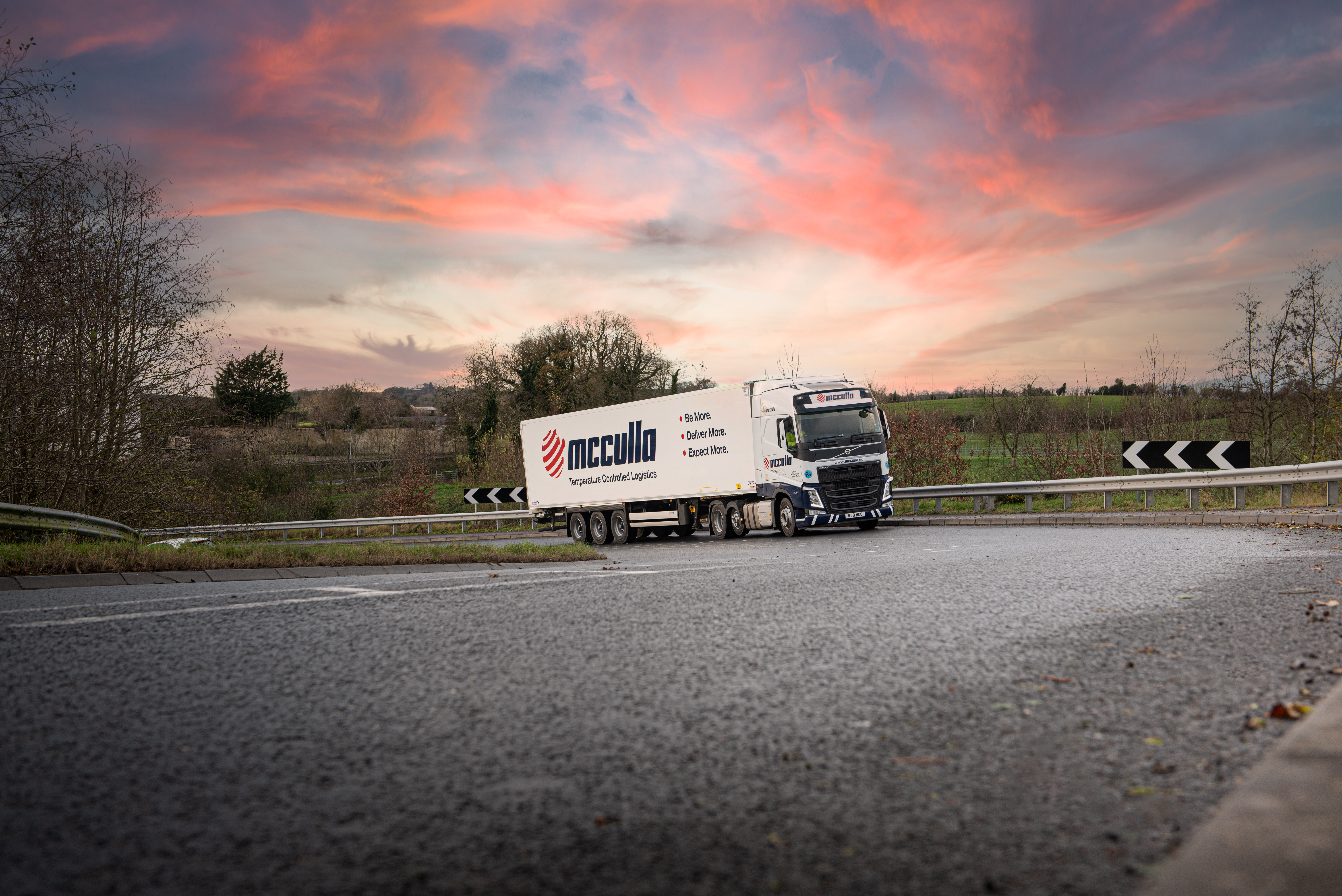
In European cold storage, the best businesses are rarely for sale. They are family-owned, privately held, and built over decades by operators who never planned an exit. Access to them is not won at auction. It is earned in the room, one relationship at a time.
That is the niche we have built One Frio around.
Ashley McCulla and Carol Thompson ran McCulla Ireland for 36 years between them before selling to us in 2025. The business their father started in 1969 with a single livestock truck had grown into one of Northern Ireland’s most significant cold storage and logistics operations, with its own anaerobic digestion plant powering 32 articulated lorries on biomethane made from supermarket food waste.
They had other offers. They chose ours. We asked them why.
How did the business start?
Carol Thompson: Our dad was a farmer. In 1969 he bought his first truck so he could take
his own cattle down to London. That truck was not refrigerated. But driving back and forward, he saw cold stores, and he started buying refrigerated trucks. In 1985 we built our first cold store in Lisburn, which is still the head office site today.
Ashley joined in 1987, straight from school. I joined in 1989 after university. In the mid-90s the ownership transferred to us. Over the years we added Dublin in 2014, Mallusk in 2001, and sites adjacent to Lisburn as we grew. More recently we went down the green energy route and built our own anaerobic digestion plant. Initially we fed it with silage and slurry from our farming roots. In the last three years we transitioned it entirely to food waste. We collect waste from Lidl when we deliver to them, and the gas we produce powers 32 of our lorries. A complete circular economy.
Ashley McCulla: Carol has a first-class honours degree. I have five GCSEs. I worked every
job in the business: laborer, forklift driver, lorry driver, traffic desk, supervisor, manager,
director. Carol always kept an eye on making sure we invoiced everybody for the jobs.
What shaped how you ran it?
Ashley McCulla: Our dad went bust in 1993. He had diversified into property, took bad partners, and it ended badly. A lot of what we did afterwards was about reviving his name.
We did not want it associated with that disaster. We wanted to make him proud.
So we sat down and said: we are going to run this like a PLC but keep the image of a family business. We stopped all the freebies. Cousins filling their cars with our diesel. Hangers-on shipping to England on our account and never paying. All of it, including for ourselves. We took modest salaries for a very long time while we grew the business to afford better.
In 2002 we brought in our first non-family director. We made that decision deliberately. If you only have family in the top positions, you never hire the best people, because the best want progression. If they cannot see a future, they will not come. Brian Bey joined us that year. He just celebrated 25 years with us this week.
Carol Thompson: We also made a rule that our own children had to finish their education, whether university or apprenticeship, and then work somewhere else for at least two years before they could join the business. We did not want them walking in thinking it was an easy touch. And the world was changing too fast. We needed new ideas coming in, not the same ideas recycling.
What mattered when you decided to sell?
Carol Thompson: Price was never the only thing. A lot of buyers wanted us to stay on for three more years with the payout tied to performance. We always thought, if we are going to work for another three years, we might as well keep the business and keep the money ourselves. That route was not going to work for us.
They also wanted all our children signed into the non-compete. I told them I am not telling my 33-year-old what they can and cannot do. They are adults. That was the lawyers talking, not Aric, but it was a line we held.
Ashley McCulla: We never stopped running the business as if we were keeping it. Right to the day the money came through. We had new equipment ordered, delivered, everything in place. If Aric and the team had said no at the last minute, we were not going to be inhibited. The investment was happening either way.
Why One Frio?
Ashley McCulla: Aric is good at not coming across corporate. He chose a line of buying family businesses. He worked out his risks and rewards for doing that, and he knew how to talk to people like us without pretending to be one of us.
He priced the business fairly on the first offer. Most buyers come in with a cheeky price and then have to bid up. Aric came in with something pretty much bang on for what the business was worth, given the risk in buying from a family. That signaled how the rest of the process was going to go.
When we got into it, he and I kept channels open the whole way through. The lawyers had to have their arguments, that is their job. But Aric stepped in a few times when we were at loggerheads to find the compromise. That is why we sold to him. Not because of a slide deck. Because of how he carried himself.
How did it feel the morning after?
Carol Thompson: The money came through on a Thursday. We went out with the guys that night. The next morning we were bringing the full team in for the formal announcement. And I was crying in bed. I did not really know why I was crying.
Running a business is stressful. I did not realise I was permanently stressed because that was just my normal. Now I am not working and I keep thinking, this is nice.
Ashley McCulla: It was the right thing for the business, and the right thing for Carol and me.
We had not seen a Christmas in decades. We were turkey farmers as kids too, so Christmas was always thousands of turkeys to pluck and clean and deliver. We wanted a life.
The thing I will miss most is knowing the people. When you run a family business you know who had a baby, whose wife is sick, who is grieving. You can create space for them before a problem becomes a problem. That is hard to replicate inside a corporate. Whether One Frio holds onto that is the next chapter.
What would you say to another family operator considering this?
Ashley McCulla: Go for it. I would say go for it.
Aric and Dami have their hearts in the right place. They want to make money, everyone does, but they want to do it right. That is not true of every buyer we met.
Sidebar: The circular economy at McCulla
Before the sale, McCulla Ireland had already invested ahead of where most of the European cold chain is today. Their on-site anaerobic digestion plant, originally fed by silage and slurry, now processes food waste from retailers like Lidl, collected on the same vehicles that deliver to those stores. The biomethane produced powers 32 articulated lorries. Electricity from the plant runs the cold store itself.
It is one of the reasons we pursued the business. Disciplined capital, long-term thinking, infrastructure built for the next decade rather than the last one. That is the profile of family operator we want to partner with.
Why this matters for the rest of the market
The European cold chain remains one of the most fragmented infrastructure sectors on the continent. Most of the assets that matter are still privately held, often by the second or third generation of the founding family. The economics of the sector are changing quickly: energy compliance, customer reporting expectations, automation capex, and labour constraints are all pushing operators toward a choice.
Reinvest alone for another generation, or partner with a platform that can carry the infrastructure forward.
There is no right answer to that question. But the operators who navigate it well tend to start
the conversation early, and they tend to start it with people they trust. That is the part investors often underestimate. In this market, access is not won with the highest multiple. It is won in the first meeting, or not at all.
If you are a family operator thinking about what comes next, or an investor trying to understand how platforms like ours get built, Ashley and Carol’s story is a useful place to start.