
How One Frio Celebrates and Honours the Legacy of the Companies We Acquire
When Ashley McCulla and Carol Thompson started considering a sale of their family's cold storage business in Northern Ireland, the price conversation came second. McCulla Ireland began with a single livestock truck in 1969. By the time Ashley and Carol led the company, it had grown to multiple sites across Belfast, a cold store in Dublin, and an anaerobic digester plant powered by food waste. Carol worked there for 36 of the 56 years the business operated. What they had built was not just an infrastructure asset. It was a reputation, built over more than five decades, for being a trustworthy provider that did what it said. That reputation was what they were most careful about protecting when they started looking at succession options. This pattern is consistent across family-owned cold storage operations. For most generational owners, a sale is a succession decision. The business has shaped the community around it: staff who have worked there for decades, customers who have called the same numbers for years, a local economy that depends on it. When owners consider selling, these are the variables they weigh most carefully. For One Frio, this is the starting point. Understanding what a business means to its owners, its staff, and its customers is as important as understanding the balance sheet.
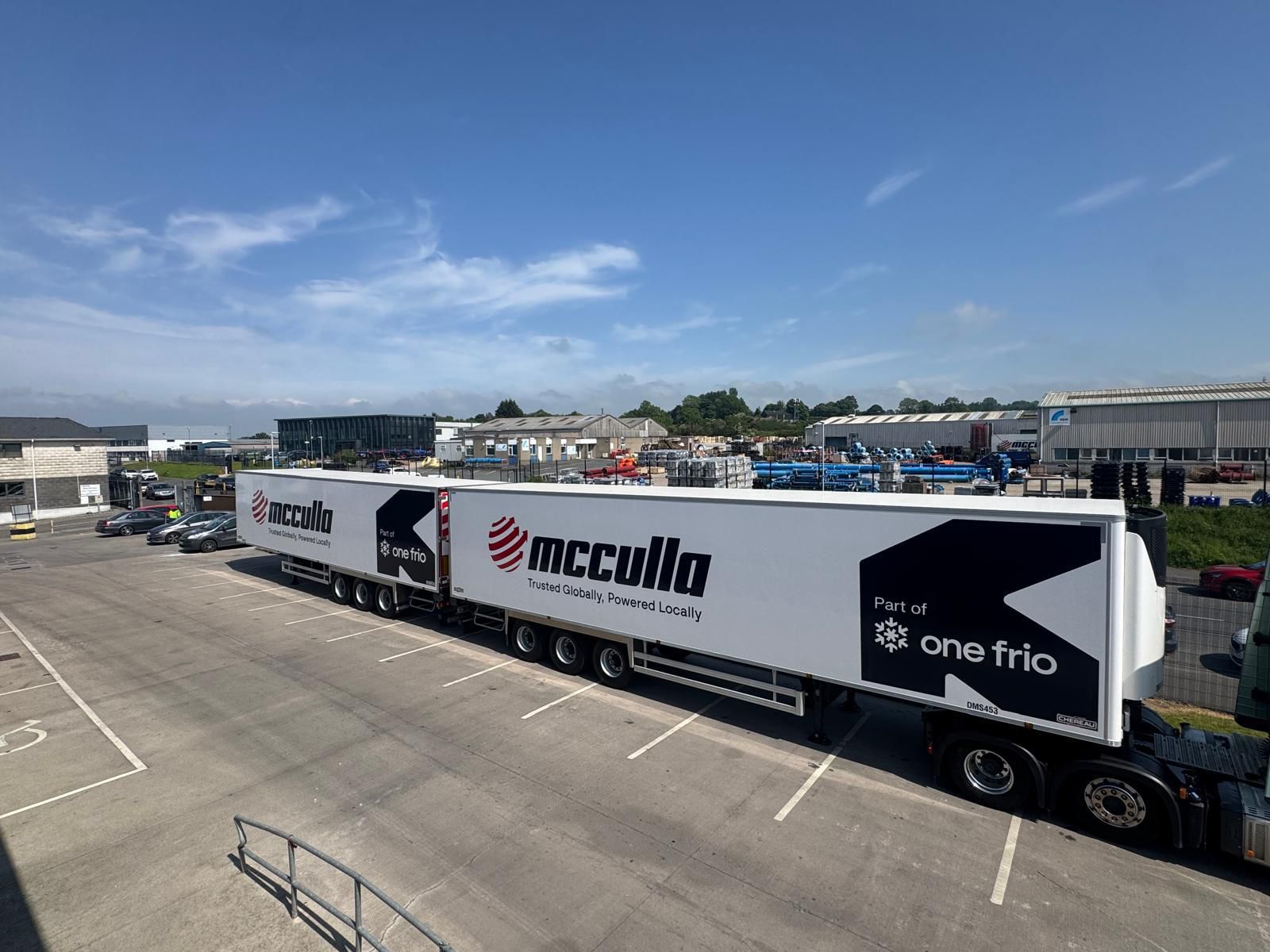
What the transition actually looked like
Alan Thompson, Sales Director at McCulla, had heard the concerns from customers and staff before. Would service change? Would prices go up? Would the people they'd known for years still be reachable?
These are not abstract concerns. Two recent acquisitions of Irish cold storage businesses by large platforms had ended badly. Customers were lost. Staff were displaced. Service eroded almost immediately after ownership changed.
"As soon as they hear you're being bought by a platform," Alan said, "the first thought is that it's going to be the same thing."
One Frio's response was direct. In the week of the purchase, the founders visited the site and addressed staff in person: jobs were secure, the team was doing a good job, and there were no plans to change how the business operated. An email address was opened specifically for staff to raise concerns, answered by Aric and Dami personally.
Staff used it. The questions were straightforward - is my job secure, does this affect transport - and every one received an answer.
That approach reflects how One Frio thinks about acquiring a business. The goal is to give people real information quickly, lead the transition as steadily as possible, and be direct throughout. The early listening phase is not a courtesy. It shapes everything that follows - which processes to leave alone, which constraints were a product of limited scale, which practices are genuinely core to how the site operates.
What stays, and what changes
Nearly a year on, McCulla Ireland runs largely as it did before. Service levels are consistent.
Customer relationships are intact. The practices that made the business recognisable to its clients - how it handles problems, how it communicates - remain in place.
That continuity is intentional. One Frio does not apply a uniform system across all sites. Each business is treated as individual. Changes to processes happen where they add genuine value, not because consolidation requires them.
New HR and accounting systems are being introduced at McCulla. As Alan put it, the systems were not fit for purpose. These are upgrades the business needed regardless of ownership. They are being introduced because they benefit the site.
The broader cultural practices - birthday celebrations, service traditions, team rhythms - remained unchanged.
The one structural change that has taken hold is accountability. Managers now meet at 9:30 each morning and again at 4:00 for a debrief. Transport, warehouse, and operations teams that previously worked in their own silos now work through problems together. Cross-functional projects are standard.
"Before, a lot of things were done at the top level that could have been given to the people with the appropriate job title," Alan said.
How long-serving people are treated
Alan Thompson had worked outside McCulla before returning - including time at Lineage - and had earned his place in the business. When One Frio acquired McCulla, he had options. He chose to stay.
He is now Sales Director. The commercial opportunities available to him in that role are larger than they would have been under family ownership.
"Our ability to do larger projects with customers is much greater now," he said.
Expansions, acquisitions, building new sites - "all that stuff happening at one time that wouldn't have happened under the family business."
For the wider team, the experience has been similar. The founders make time to speak with people across the site, not just management. Visits from Aric are regular, if unpredictable - sometimes twice in two weeks, sometimes not for four months.
Staff noted they found the founders more approachable than they had expected from a platform company.
This matters operationally. Staff who were there before the sale carry customer relationships, institutional knowledge, and the credibility to reassure the market that service will continue.
Losing them is expensive. Keeping them requires demonstrating early that their contributions are valued - not just saying it.
Why legacy produces better commercial outcomes
The cold storage businesses One Frio acquires have grown over decades through local trust.
Their customer relationships are the product of consistent service, accessible leadership, and a reputation built over years.
When an acquisition erodes that, the customer relationships go with it. Two platforms that acquired Irish cold storage businesses in recent years lost significant customer bases within months. The service culture changed immediately, and the relationships that had sustained those customers did not survive the transition.
One Frio's approach is more deliberate. Preserving what made a business worth acquiring protects its commercial value. Customers see continuity. Staff retention stays high. The regional reputation holds.
That stability also creates the conditions for genuine operational improvement. New systems, better data, and expanded commercial capacity land without resistance in businesses where the culture has been understood rather than overwritten. The KPI discipline, cross-functional management structures, and access to capital One Frio introduces produce better results in environments where the foundation has not been disrupted.
Occupancy across One Frio's sites consistently runs well above the industry average. That is what happens when good operational culture is preserved and strengthened rather than replaced.
For investors, this is how platform value compounds. Each site that retains its customer relationships and staff, while gaining access to better systems and capital, performs better than it did independently. For business owners, it means the business they built does not disappear into a consolidation machine.
McCulla's story illustrates the point. The most valuable thing One Frio understood about the business was what not to change.